
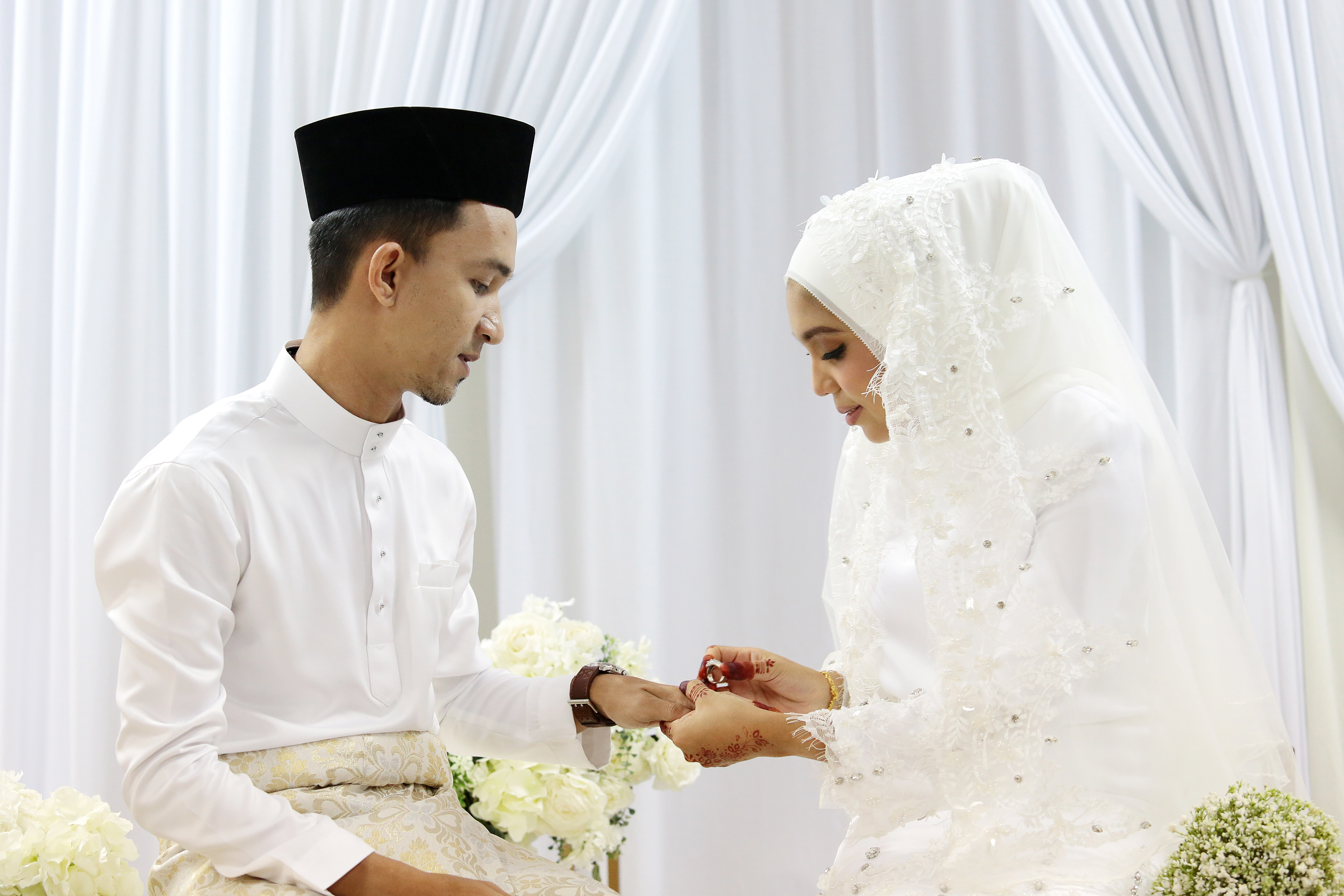
When a Nikah is not legally recognised in England & Wales

Partner
Case law insight: MA v WK [2025] EWFC 499
Overview
This High Court judgement addresses three conjoined applications for declarations of marital status under section 55(1) of the Family Law Act 1986. Each case arose from a Nikah ceremony – the traditional Islamic marriage contract – conducted in England and Wales that did not comply with the formal requirements of the Marriage Act 1949, meaning the nikah was not legally recognised under English law. The applicants accepted that their ceremonies were therefore ‘non-qualifying ceremonies’, following the Court of Appeal’s decision in Akhter v Khan.
Cases of this nature often arise when there is uncertainty about the legal recognition of a Nikah.
The central legal issue was whether the subsequent registration of those ceremonies in Pakistan could convert what was, in English law, a non-qualifying ceremony into a valid foreign marriage capable of recognition in England & Wales. Cusworth J held that it could not.
While the legal conclusion was orthodox, the judgement compellingly illustrates the practical and personal consequences of the current law - consequences that align closely with the concerns identified by the Law Commission in its Weddings Law Report (2022).
The facts
All three applicants were women who had entered long-term relationships based on religious-only marriage ceremonies carried out entirely in England:
- MA and WK (2013) shared four children. The relationship later broke down amid serious allegations of domestic abuse. MA relied on a Pakistani marriage registration certificate issued in 2024, which purported to record the marriage as having been effective since 2013.
- TM and MM (1992) had three children and separated in 2016. TM produced evidence of Pakistani registration only in October 2025 – 33 years after the ceremony and after MM had already remarried.
- AM and RK (2005) had children together. There was no evidence of any overseas registration. AM stated that she had genuinely believed that a Nikah marriage conferred legal status in England.
Each applicant sought a declaration that she was, or had been, legally married to her former partner.
The legal framework
Cusworth J applied settled principles of English family law and private international law.
At the heart of the judgement is the rule of lex loci celebrationis: the formal validity of a marriage is governed by the law of the place where the ceremony is celebrated. Where that place is England & Wales, compliance with the Marriage Act 1949 is mandatory.
A ceremony that falls wholly outside that statutory framework, however sincere the parties’ intentions and however long the relationship, amounts to a non-qualifying ceremony and does not create a legally recognised marriage.
The court also reaffirmed that:
- Registration is administrative and evidential; it is not the act of marriage itself.
- The presumption of marriage cannot operate where there is positive evidence that legal formalities were not complied with.
The court’s findings
The applicants argued that Pakistani registration should effectively relocate the marriage to Pakistan for conflict-of-laws purposes. Cusworth J rejected that submission.
He held that the marriages remained governed by English law because:
- The ceremonies occurred in England.
- Pakistani registration merely recognised a ceremony that Pakistan accepted had taken place in England.
- To treat registration as determinative would allow one party unilaterally to create a marriage retrospectively, potentially decades later.
Cusworth J described such an outcome as a recipe for ‘procedural and litigation chaos’, particularly where, as in these cases, one party had since remarried and third-party rights had arisen.
Accordingly, all applications under section 55(1) were dismissed.
Alignment with the Law Commission’s Weddings Law Report (2022)
Although legally orthodox, the judgement closely mirrors the systemic failings identified by the Law Commission.
1. Non-qualifying ceremony (non-legally binding marriage)
The Law Commission highlighted the vulnerability and prejudice that can be caused when there is a failure to enter into legally binding marriage due to deceit, complexity, inaccessibility and misunderstanding.
This case exemplifies this vulnerability and prejudice. In each instance, women spent many years believing they were married under English law, only discovering the reality when the relationship broke down - often against a background of domestic abuse.
2. Location of marriage
The Commission criticised a law overly focused on place and buildings rather than on who is authorised to conduct weddings. Cusworth J’s analysis shows the consequences: ceremonies intended to create binding commitments are legally invisible because they fall outside prescribed venues and processes.
The Commission’s proposed officiant-based system would significantly reduce outcomes of this kind by allowing the status of a valid or void marriage to be easier to achieve.
3. Registration a safeguard, not remedy
The applicants’ reliance on Pakistani registration reflects the Commission’s concern and recommendation that the marriage should be formed when both parties have expressed their consent to marry each other in each other’s presence.
Final thoughts
The case powerfully demonstrates that:
- Outdated marriage formalities continue to produce unintended non-marriages.
- Courts lack the tools to remedy resulting injustice.
- Belief, intention and long cohabitation provide no legal safety net.
It strongly supports the case for implementing the Law Commission’s weddings law reforms, while also highlighting the pressing need for cohabitation reform to protect those for whom marriage law fails.
Where uncertainty arises, taking advice from Islamic divorce lawyers can help clarify legal position and avoid unintended consequences.
You can read the full judgement in MA v WK [2025] EWFC 499 here.
More from Nazia Rashid
Government launches consultation on cohabiting couples' rights
The government has opened a consultation on cohabitation law reform, proposing new rights for cohabiting couples on separation Here's what's proposed and what to do now.

Islamic marriage and divorce in England & Wales
Islamic marriage in England & Wales: how Nikah, Mahr and civil law interact, and what families with international ties need to know on divorce.

Conduct in financial remedy proceedings - case law insights
Explore how conduct affects financial remedy proceedings, from the 'obvious and gross' threshold to recent rulings on economic abuse and coercive control.